What Is an Industrial Temperature Sensor?
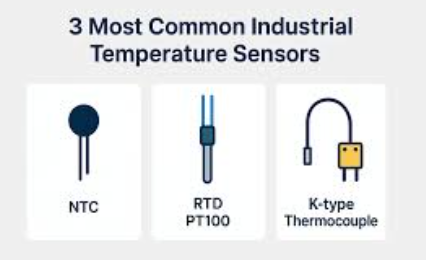
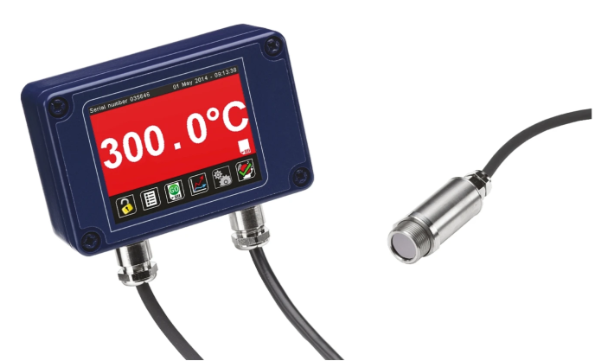
An industrial temperature sensor is a field-level sensing device used to convert thermal conditions into electrical signals that can be reliably acquired, transmitted, and processed by industrial data acquisition systems.
Within a typical industrial architecture, temperature sensors belong to the perception layer, providing raw physical data that feeds PLCs, data loggers, or edge gateways for further analysis and control.
Common Industrial Applications
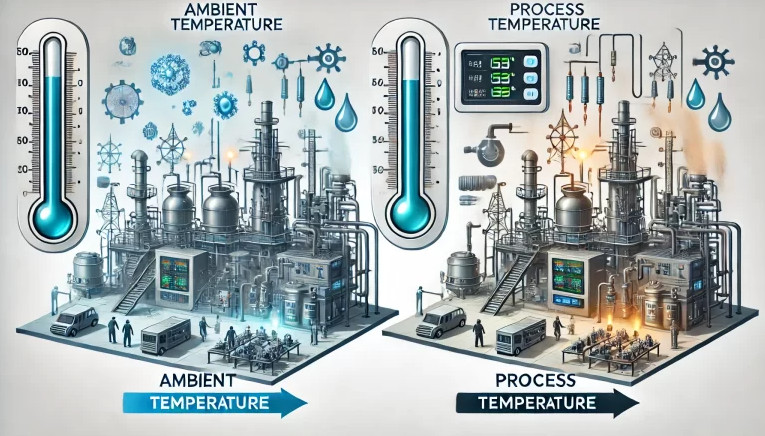
Chemical Processing
Temperature sensors monitor reactor vessels, pipelines, and heat exchangers to ensure stable chemical reactions and prevent thermal runaway.
Manufacturing and Assembly Lines
Used in furnaces, injection molding machines, and surface treatment processes where temperature stability directly affects product quality.
Energy and Power Systems
Applied in boilers, transformers, and battery systems to detect overheating and improve operational safety.
Warehousing and Cold Storage
Ensure temperature compliance for food, pharmaceuticals, and sensitive materials during storage and transportation.
Key Technical Parameters to Consider
When selecting an industrial temperature sensor for data acquisition, the following parameters must be evaluated as a system, not in isolation:
- Measurement range
Must cover both normal operation and abnormal peak conditions. - Accuracy
Determines data reliability for closed-loop control and historical analysis. - Response time
Critical for fast-changing thermal processes such as chemical reactions. - Operating environment
Includes vibration, humidity, corrosion, and electromagnetic interference. - Output signal (Analog / RS485 / Modbus)
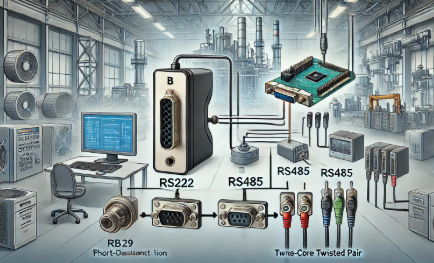
Digital outputs such as RS485 communication using Modbus RTU protocol are preferred for long-distance, noise-resistant transmission.
Installation and Wiring Considerations
Proper installation has a greater impact on data quality than sensor specifications alone.
- Ensure correct grounding to avoid ground loops.
- Maintain sufficient distance from high-voltage cables and motors.
- Use shielded twisted-pair cables for RS485 communication.
- Avoid thermal conduction errors caused by improper sensor mounting depth.
Improper wiring is a common cause of unstable readings and intermittent data loss in industrial environments.
Data Acquisition and Communication
Industrial temperature data is typically transmitted via RS485 communication using the Modbus RTU protocol, allowing multiple sensors to share a single bus over long distances.
Temperature sensors are often deployed alongside industrial pressure sensors in process monitoring systems, enabling correlated analysis of thermal and mechanical behavior.
This communication structure simplifies integration with PLCs, industrial PCs, and edge gateways.
Common Problems and Troubleshooting
- Measurement drift caused by long-term exposure to high temperatures
- Signal noise due to improper shielding or grounding
- Data loss from address conflicts on RS485 networks
- Slow response resulting from incorrect sensor encapsulation
Most issues can be traced back to installation errors or protocol configuration mismatches rather than sensor failure.
Conclusion
Selecting an industrial temperature sensor is not a standalone decision. Accuracy, installation, data acquisition, and communication protocol must be considered as a unified system.
A well-selected sensor combined with stable RS485 communication and Modbus RTU integration ensures long-term data reliability in industrial environments.
About the Author