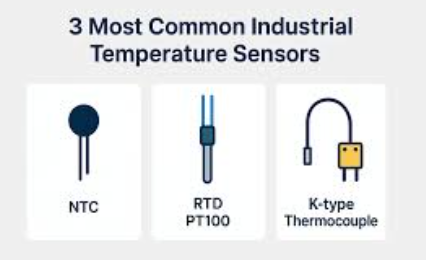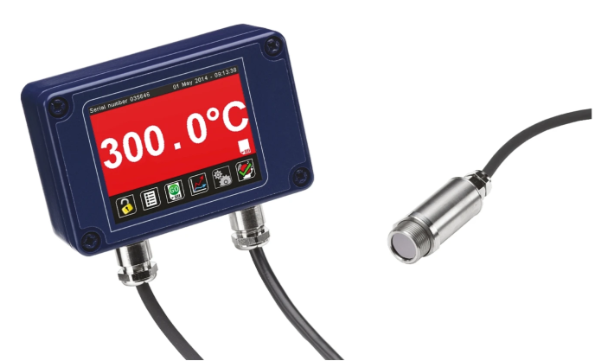
Temperature sensors in chemical plants are critical field devices used to continuously monitor process temperatures under high pressure, corrosive media, and strict safety constraints.
In industrial data acquisition systems, these sensors form the primary source of real-time thermal data that directly influences control logic, alarm systems, and production stability.
Unlike general manufacturing environments, chemical plants impose higher demands on sensor reliability, consistency, and long-term stability.
In chemical reactors, temperature sensors are used to control reaction rates and prevent runaway reactions.
In distillation columns, temperature profiles are essential for separation efficiency and product purity.
In pipelines and storage tanks, temperature monitoring supports safety compliance and early fault detection.
These applications rely on uninterrupted data acquisition rather than periodic manual measurement.
Key technical parameters must be evaluated specifically for chemical plant environments.
Measurement range must accommodate both normal operating temperatures and potential abnormal excursions.
Accuracy affects reaction control precision and product consistency.
Response time is critical for detecting rapid thermal changes during exothermic reactions.
Operating environment includes corrosion resistance, pressure tolerance, and vibration exposure.
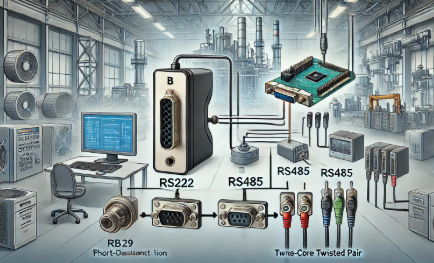
Output signals using RS485 communication with the Modbus RTU protocol are commonly selected for long-distance, noise-resistant transmission across plant areas.
Sensor selection without considering these constraints often leads to premature failure or unreliable data.
Installation and wiring practices in chemical plants must address both measurement accuracy and safety requirements.
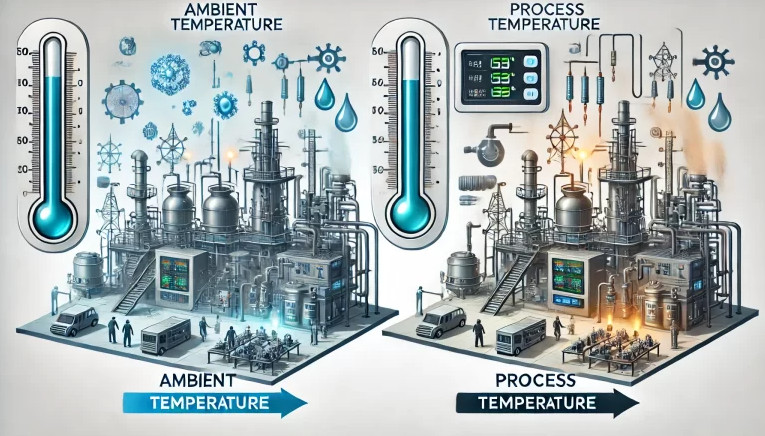
Sensors must be installed at locations that accurately reflect process temperature rather than wall temperature.
Proper grounding is essential to avoid noise introduced by large electrical equipment.
Shielded cables should be used for RS485 communication, with careful routing to avoid high-voltage lines.
Explosion-proof and sealed fittings are often required in hazardous zones.
Incorrect installation is a frequent cause of misleading temperature data.
Temperature data in chemical plants is typically transmitted via RS485 communication using the Modbus RTU protocol to centralized PLCs or data acquisition gateways.
This approach supports multi-sensor networks over long distances while maintaining data integrity.
Temperature sensors are often deployed together with industrial pressure sensors to provide correlated insights into process conditions and improve fault detection accuracy.
Common problems include sensor drift caused by chemical exposure, slow response due to protective wells, intermittent data loss from network interference, and inconsistent readings during process transitions.
Troubleshooting should focus on both sensor condition and communication stability rather than treating them separately.
In chemical plants, temperature sensor selection and deployment must be treated as part of a complete data acquisition system.
Reliable measurement depends on sensor construction, installation quality, and robust RS485 communication using Modbus RTU.
System-level thinking is essential for safe and stable chemical operations.
About the Author