What Is RS485?
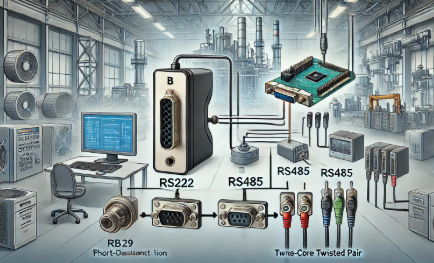
RS485 is a differential serial communication standard widely used in industrial environments for reliable, long-distance data transmission between sensors, controllers, and data acquisition systems.
Despite the emergence of Ethernet-based protocols, RS485 remains a foundational infrastructure due to its robustness, simplicity, and cost efficiency.
Typical Industrial Use Cases
- Connecting industrial temperature sensors to PLCs
- Multi-drop sensor networks in factories
- Communication between field devices and edge gateways
- Data acquisition systems in harsh electromagnetic environments
RS485 is especially suitable where long cable runs and multiple devices are required.
Protocol Architecture Overview
RS485 defines the physical layer, not the application protocol.
- Differential signaling improves noise immunity
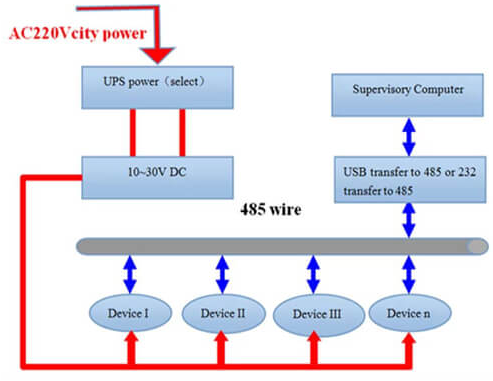
- Multi-drop topology supports multiple devices on one bus
- Typically used with Modbus RTU protocol at the application layer
- Requires master-slave polling mechanisms for data exchange
Communication Parameters
Stable communication depends on consistent parameter configuration across all devices:
- Baud rate
- Parity
- Data bits
- Timeout settings
Mismatched parameters are one of the most common causes of communication failure.
Common Sensors Using This Protocol
RS485 is commonly used with:
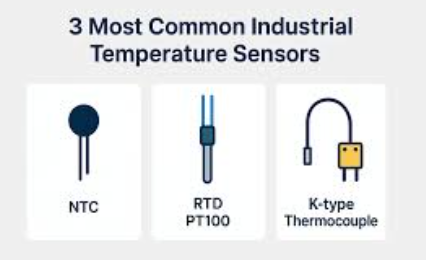
- industrial temperature sensors
- industrial pressure sensors
- industrial flow sensors
These sensors leverage Modbus RTU for structured data exchange over RS485 networks.
Common Issues and Debugging Tips
- Noise interference from motors and inverters
- Improper termination resistance at bus ends
- Ground potential differences causing communication instability
- Address conflicts in multi-device networks
Effective noise reduction includes proper grounding, termination resistors, and cable shielding.
Conclusion
RS485 remains a critical communication backbone in industrial data acquisition systems. When combined with the Modbus RTU protocol, it provides a stable, scalable, and cost-effective solution for sensor networks.
Proper wiring and noise reduction practices are essential to fully realize its reliability advantages.
About the Author