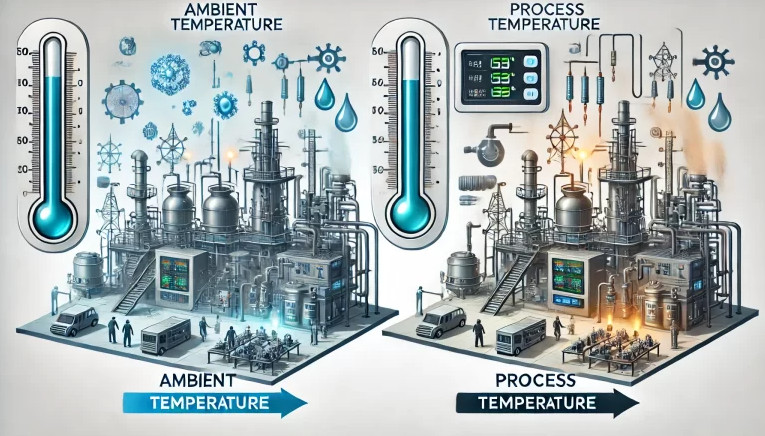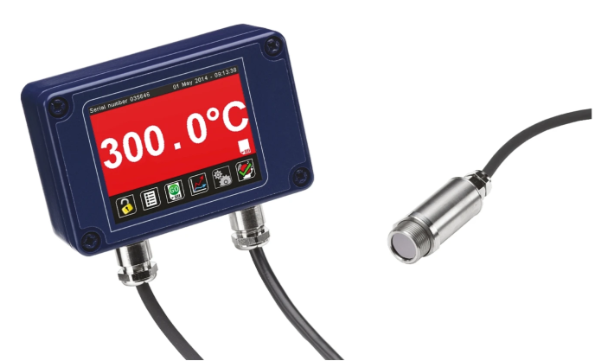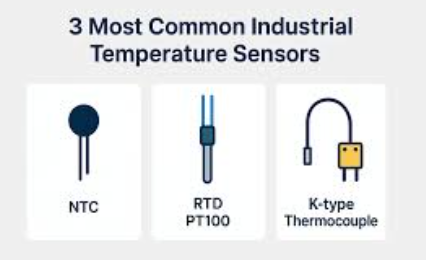
Industrial high accuracy temperature sensors are designed to provide precise and stable thermal measurements in environments where small deviations can lead to process instability, quality issues, or safety risks.
In industrial data acquisition systems, these sensors remain part of the perception layer but directly influence control logic, alarm thresholds, and historical data reliability.
High accuracy temperature measurement is not only about sensor specifications. It is closely tied to signal transmission quality, installation conditions, and communication protocol stability.
High accuracy temperature sensors are commonly deployed in chemical manufacturing, pharmaceutical production, precision machining, and energy systems.
In chemical processes, precise temperature control ensures reaction consistency and prevents by-product formation.
In pharmaceutical environments, temperature accuracy is often required for regulatory compliance and batch traceability.
In precision manufacturing, even minor thermal drift can cause dimensional deviations and material defects.
These applications typically involve continuous data acquisition rather than isolated measurements.
When comparing high accuracy temperature sensors, several technical parameters must be evaluated together:
Measurement range determines whether the sensor can cover both normal operating conditions and abnormal peaks without saturation.
Accuracy defines the maximum allowable deviation and directly impacts control performance.
Response time affects how quickly the system can react to thermal changes.
Operating environment includes vibration, humidity, corrosion, and electromagnetic interference.
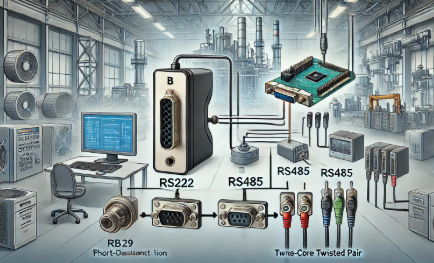
Output signal selection is critical, with digital outputs such as RS485 communication using the Modbus RTU protocol offering superior noise immunity and long-distance transmission.
Ignoring any of these parameters can compromise overall system accuracy, even if the sensor itself is highly precise.
Installation and wiring have a significant influence on real-world accuracy.
Improper grounding often introduces measurement offset and noise.
Long cable runs without shielding can degrade signal quality.
Thermal conduction errors may occur if the sensor is not mounted at the correct depth or location.
High accuracy sensors are particularly sensitive to installation mistakes, making standardized wiring practices essential.
In industrial environments, high accuracy temperature data is typically transmitted via RS485 communication using the Modbus RTU protocol.
This approach allows multiple sensors to share a single communication bus while maintaining reliable data integrity.
High accuracy temperature sensors are frequently deployed alongside industrial pressure sensors to enable cross-parameter analysis and improve process diagnostics.
Stable communication ensures that precision at the sensor level is preserved through the entire data acquisition chain.
Common issues encountered in high accuracy temperature measurement include long-term drift caused by thermal stress, noise-induced fluctuations from nearby electrical equipment, intermittent data loss due to RS485 address conflicts, and delayed response resulting from excessive sensor encapsulation.
Most of these problems originate from system integration issues rather than sensor defects.
High accuracy temperature sensor selection must be approached as a system-level decision.
Sensor specifications, installation practices, data acquisition hardware, and communication protocols must align to achieve reliable and repeatable results.
Precision measurement is only meaningful when the entire acquisition and transmission chain is stable.
About the Author